fredag 8 november 2013

Naturhistoriska riksmuseet

This week Mathias was in Stockholm to give two talks at "Naturhistoriska Riksmuseet". The museum has just inaugurated a permanent exhibition called "Djuret människan" focusing on the similarities and differences between humans and other animals. Apart from the talks Mathias has also contributed with information to the exhibition...and do you recognize the loving couple on the big screen behind Mathias? Yes, it is Siden and Juno.

//Helena

tisdag 22 oktober 2013

Electricity


Slowly the new parts of the facility are being finished. I've spent the last rainy days painting the lecture room in the attic, and today Kenneth, our nice and skilled electrician, is installing the electricity. Kenneth has done all the electrical work on the facility, which is both raven and rat safe.
Can is also here today to spend some time with the ravens and discuss the upcoming article writing with Mathias.  At the moment Can is spending a month with the neurobiologists at BMC to learn how to dissect and study bird brains.

//Helena

fredag 18 oktober 2013

Anniversary talk

During the LUCS 25th anniversary, Mathias gave a talk (in Swedish) on how the similarities between corvid and great ape cognition can tell us more about how complex cognition has evolved. See the talk here!

//Helena

fredag 11 oktober 2013

Last recordnings for the radio documentary


Today Lotta Malmstedt was here to record some additional audio for her radio documentary. She has spent half her summer going through and organizing interviews and recordnings, and just wanted to add a few missing details.
The ravens have grown quite accustomed to Lotta and her gear by now, so she was even able to record some parts inside the aviary.

We are looking forward to the programme!

//Helena

torsdag 10 oktober 2013

25th Anniversary


The LUCS logo - made of sugar and plant soil - in front of the King's House in Lundagård.
Two weeks ago, the department of Cognitive Science  - LUCS - celebrated its 25th anniversary. This was manifested by two days of great lecturing open to the department and the public. One of the invited speakers was Frans de Waal, the world famous primatologist, and as he and Mathias know each other, he was invited to visit the ravens.

Close encounter with the ravens, and Frans got some bites to show the audience during his talk.
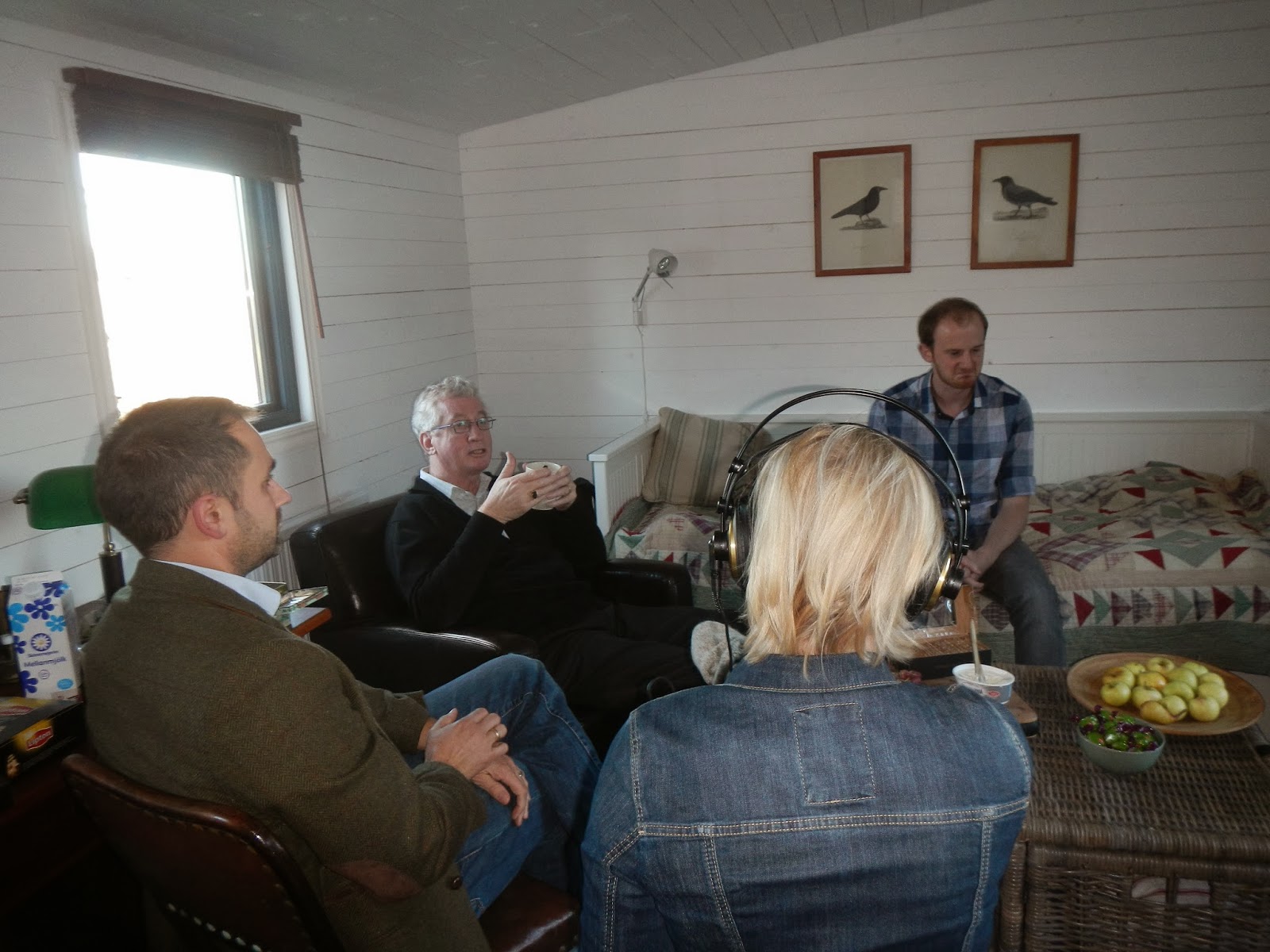
A brief cup of tea in the cabin. Lotta Malmstedt from the Swedish radio, joined to get some more material for her documentary.
//Helena

måndag 16 september 2013

Play


Sketching for the paper
Speaking of the playfulness of the ravens  - I've been going through some films to find representative snapshots for a paper on subadult raven play - and it really is hilarious!


Once this paper is submitted, we will start on another study on play - the earliest form taking place in the nest, when the chicks are only a few weeks old. We filmed Juno's and Siden's chicks in the nest this summer, and now it's time analyze the data. A quite time consuming job as it is done frame by frame, but since temperature is dropping and it is raining heavlily it might be quite nice anyway.

//Helena

torsdag 12 september 2013

Flight


From my work at the Centre for Animal movement research at the Biology department in Lund, I have learnt about amazing aerial accomplishments in the bird world. For example, the great snipe that can make up to 6800 km nonstop flights when migrating, or the common swift that spends almost it's entire life on the wing - even eating and sleeping.
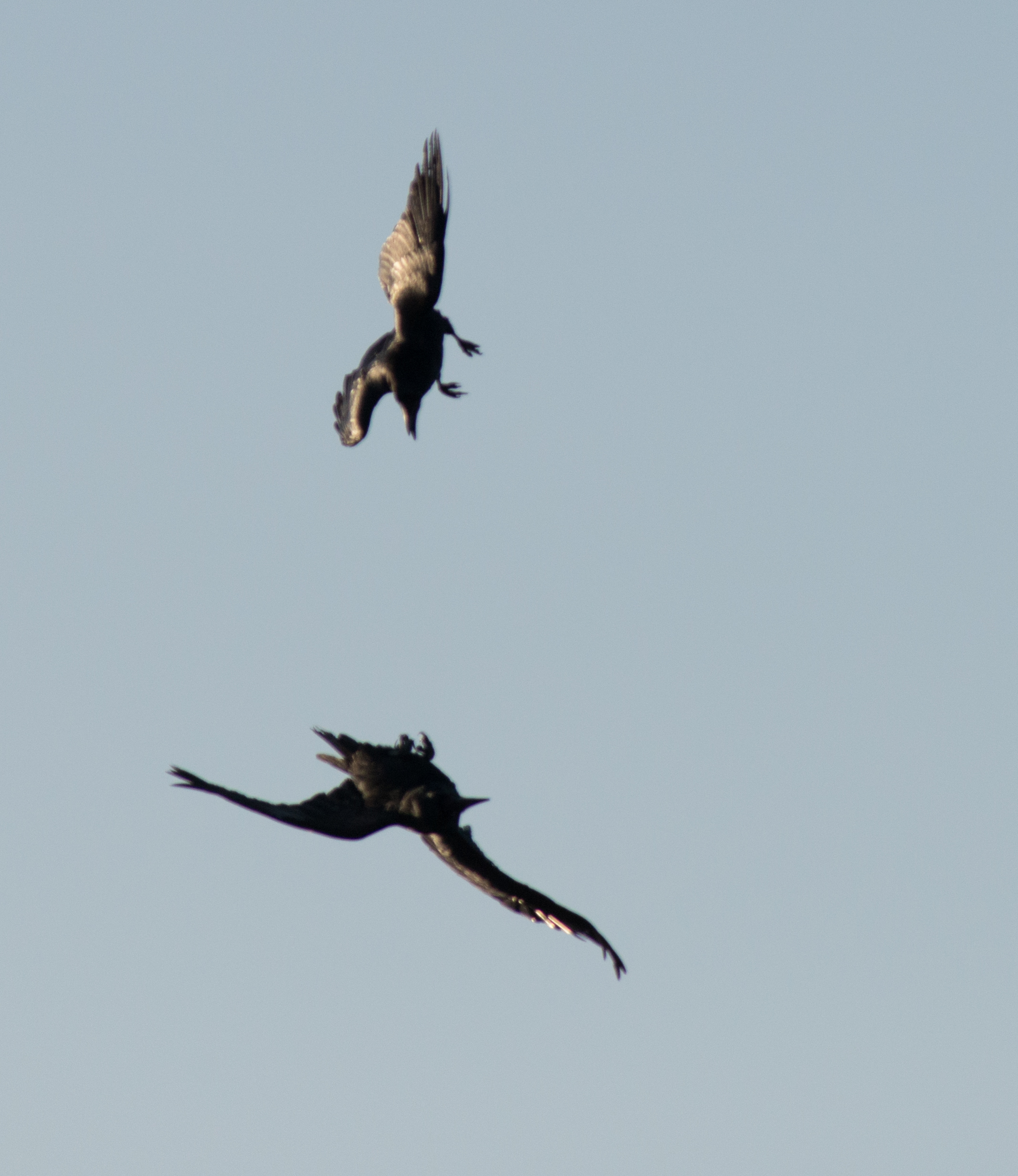
Ravens are no famous long distance migrants, but when it comes to flight acrobatics, they must be among the top birds. Maybe that is partly due to their playfulness - chasing each other with incredible speed, dropping items from high altitude and then rapidly dive to cach them again, or rolling and spinning in the sky. (See for example: http://farm3.staticflickr.com/2774/4356856066_84943edf39.jpg or http://farm9.staticflickr.com/8091/8597127972_49315049a2_o.jpg)

Ten years ago, ravens were rarely seen in this area, but in recent years, the raven population in southern Sweden has increased, and now we have lots of wild raven visiting. Likely, our ravens attract some of them - especially the vagrants, young ravens who has not yet paired up. But for the last two yeas, a raven pair has breed no less than 600 metres from our aviaries, and during breeding season, we can hear the chicks beg for food and the adults communicating with each other and our ravens.

It is with mixed emotions we watch them fly over us, as it somehow stresses the limits and boundaries of our own aviaries. It is a comfort, though, that the ravens in our aviaries quite often fly themselves out of breath. Including the runway, the aviary complex streches about 35 metres, and while play chasing they just fly through the runway, makes a quick circle, and then back through the runway and into the next aviary. Or, they just bump into one of the big rafters with their feet - similar to a swimmer's turn  - and immediately fly off again.


It is a special experience, walking through the runway as one of the ravens are passing, just centimetres above you head.

//Helena